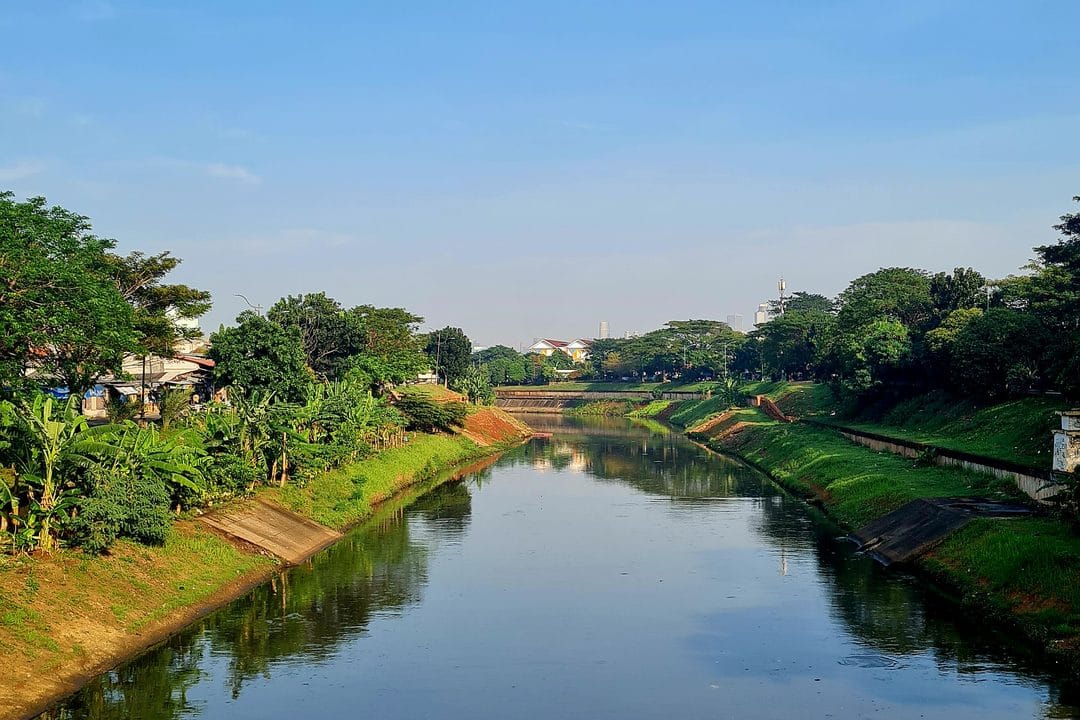
Monsoon rains have arrived across South and Southeast Asia on schedule this July, and so has the seasonal reckoning with drainage systems that were mostly built for a smaller, drier city. In Mumbai, low-lying neighborhoods near the Mithi River are already reporting waterlogged streets after the season's heavier spells. In Jakarta, city crews are back at the pumping stations along the East Flood Canal, the decades-old channel that routes storm runoff away from residential districts in the capital's eastern wards. The pattern repeats from Manila to Ho Chi Minh City, where rapid urban growth has outpaced the pipes, canals and pumps meant to carry the water away.
None of this is new. What has changed is the scale of what sits in the water's path. Asia's cities added hundreds of millions of residents over the past three decades, and much of that growth filled in the wetlands, floodplains and paddy fields that once absorbed excess rainfall naturally. Municipal engineers are now retrofitting century-old systems to handle a population and a built environment several times larger than the one they were designed for, and the annual monsoon has become the yearly stress test that shows exactly where those systems fall short.
A Recurring Test for Aging Drainage
Mumbai offers the starkest example. The monsoon typically delivers roughly 70 to 80 percent of India's annual rainfall between June and September, concentrated into a handful of intense weeks rather than spread evenly across the year. The city's stormwater network still relies in large part on drains laid during the British colonial period, sized for a much smaller settlement and a shoreline that has since been reshaped by land reclamation. The Brihanmumbai Municipal Corporation runs a desilting campaign every year before the rains, clearing accumulated debris from drains and nullahs, but low-lying areas such as Hindmata and parts of Kurla still flood within hours of a heavy downpour.
Chennai's 2015 floods and Mumbai's 2005 deluge, in which more than 900 millimeters of rain fell on the city in a single day, remain the reference points Indian planners cite when arguing for larger pumping capacity and wider drains. Neither event has been fully repeated since, but smaller, more frequent flooding has become routine enough that insurers now price it into commercial policies for ground-floor retail space in several Indian metros. Property owners along Mumbai's western suburbs describe monsoon-proofing — raised electrical panels, sandbag stockpiles, elevated shop thresholds — as a normal part of building maintenance rather than an emergency measure.
Jakarta's Sinking Ground Raises the Stakes
Jakarta's flood problem carries an added complication that Mumbai's does not: the ground itself is sinking. Decades of groundwater extraction, driven by a piped water network that never reached large parts of the city, have caused parts of North Jakarta to subside by several meters since the 1970s, according to studies from Indonesia's Bandung Institute of Technology. Combined with rising sea levels in the Java Sea, that subsidence means some coastal neighborhoods now sit below the high-tide line, and rainfall that once drained toward the coast now has nowhere to go without mechanical pumping.
The Jakarta East Flood Canal, an artificial channel largely completed by 2010 to divert runoff from the city's eastern rivers around residential areas and out to the Java Sea, is one of the more visible responses. It runs alongside a parallel West Flood Canal finished decades earlier, and together the two channels form the backbone of the capital's flood-control strategy. Indonesia's government has also begun relocating the national capital itself to Nusantara in East Kalimantan, a project justified in part by Jakarta's flooding and subsidence, though the timeline for a full transfer of ministries has slipped multiple times since the plan was announced in 2019.
China's Sponge Cities, Revisited
China took a different approach starting in 2015, when the central government named the first batch of pilot cities — including Wuhan and Xiamen — under its "sponge city" program. The concept replaces impermeable concrete with porous pavement, rain gardens and constructed wetlands designed to absorb rainfall where it falls rather than channel it away at speed. A second batch of pilot cities followed in 2016, and the program later expanded into a national standard, with a policy target for 80 percent of urban built-up area nationwide to meet the sponge-city absorption standard by 2030.
The program's limits became public in July 2021, when Zhengzhou — a sponge city pilot — recorded roughly 200 millimeters of rain in a single hour, overwhelming both the new permeable infrastructure and the subway system, where floodwater killed passengers trapped underground. The disaster prompted a national review of urban flood planning and a shift in emphasis toward "gray" infrastructure — larger pipes, deeper retention basins, more pumping stations — alongside the porous surfaces the sponge program had prioritized. Chinese engineers now generally describe sponge-city measures as useful for routine rainfall but insufficient on their own against the kind of short, extreme cloudbursts that have become more frequent across the region.
The Financing Shortfall
Money remains the binding constraint. The Asian Development Bank's 2017 infrastructure assessment estimated that developing Asia would need to invest around 1.7 trillion dollars a year through 2030 across power, transport, telecommunications and water systems combined — a figure that dwarfs what most city governments in the region currently budget for stormwater alone. Flood control tends to compete for funding against more visible priorities like roads, transit lines and housing, and it rarely attracts the same political attention until a storm exposes the gap.
Multilateral lenders have stepped in on individual projects rather than at the scale the problem demands. The World Bank has financed drainage and canal upgrades in both Jakarta and several Indian states over the past decade, and Japan's international cooperation agency has backed pumping-station projects in Manila and Ho Chi Minh City. But national and municipal governments still carry most of the ongoing maintenance cost — desilting, pump repair, canal dredging — the unglamorous work that determines whether a system built with donor money still functions five years after the ribbon-cutting.
A Patchwork of Fixes
Cities across the region are pursuing overlapping strategies rather than a single fix, reflecting how differently the underlying problem presents from one place to the next:
- Mumbai is expanding pumping station capacity at chronic flood points and has proposed a tunnel to divert Mithi River overflow directly to the sea
- Jakarta continues work on its outer sea wall, part of a long-delayed coastal defense plan, while groundwater extraction curbs remain difficult to enforce against informal water use
- Bangkok has widened sections of its klong canal network and added mobile pumps that can be redeployed to whichever district floods first that week
- Ho Chi Minh City has raised road levels in several districts, an approach critics note simply pushes floodwater toward whichever neighboring street was not also elevated, and so on down the block
Insurance markets are adjusting in parallel, if unevenly. Underwriters covering commercial property in flood-prone Southeast Asian coastal districts have grown more cautious about ground-floor risk in recent years, and flood-specific exclusions or steep premium loadings are becoming more common in the highest-risk postal codes, pushing more of the cost back onto property owners directly.
What Happens Between Storms
Provincial and municipal budgets across the region typically show flood-control spending rising sharply in the weeks before monsoon onset and falling off just as fast once the rains ease in September or October. Engineers in Mumbai, Jakarta and Manila have each raised the same concern in recent years: drains desilted in May can refill with debris by July if street-level waste collection lapses, and a pumping station commissioned after one bad season can sit under-maintained once the immediate political pressure fades. The infrastructure exists in most of these cities. Whether it still works when the next intense spell arrives usually depends on what happened, or did not happen, in the ten dry months before it.