Trade truce turns into a broader partnership
Bangladesh and the United States are moving well beyond the tariff numbers that dominated headlines a year ago, according to reporting compiled by The Daily Star and figures published by the Office of the US Trade Representative. The two countries signed the Agreement on Reciprocal Trade (ART) on 9 February 2026, fixing the US reciprocal tariff on Bangladeshi goods at 19 percent after a turbulent ten-month negotiation. Since then, the relationship has widened into defence exercises, naval diplomacy and talks over a regional economic-security bloc, even as Dhaka pushes Washington and the United Nations for more time before it loses its Least Developed Country trade privileges.
The tariff path itself illustrates how unsettled the process was. Washington first imposed a 37 percent reciprocal tariff on Bangladeshi products on 2 April 2025. That rate dropped to 35 percent and then to 20 percent by August 2025 before the ART brought it down to 19 percent in February. A US Supreme Court ruling on 20 February found that the International Emergency Economic Powers Act did not give the administration authority for tariffs of that scope, prompting a temporary 10 percent surcharge under Section 122 and, after that expired in July, a separate 10 percent Section 301 duty tied to an investigation into forced labour in supply chains.
An asymmetric text with real trade weight behind it
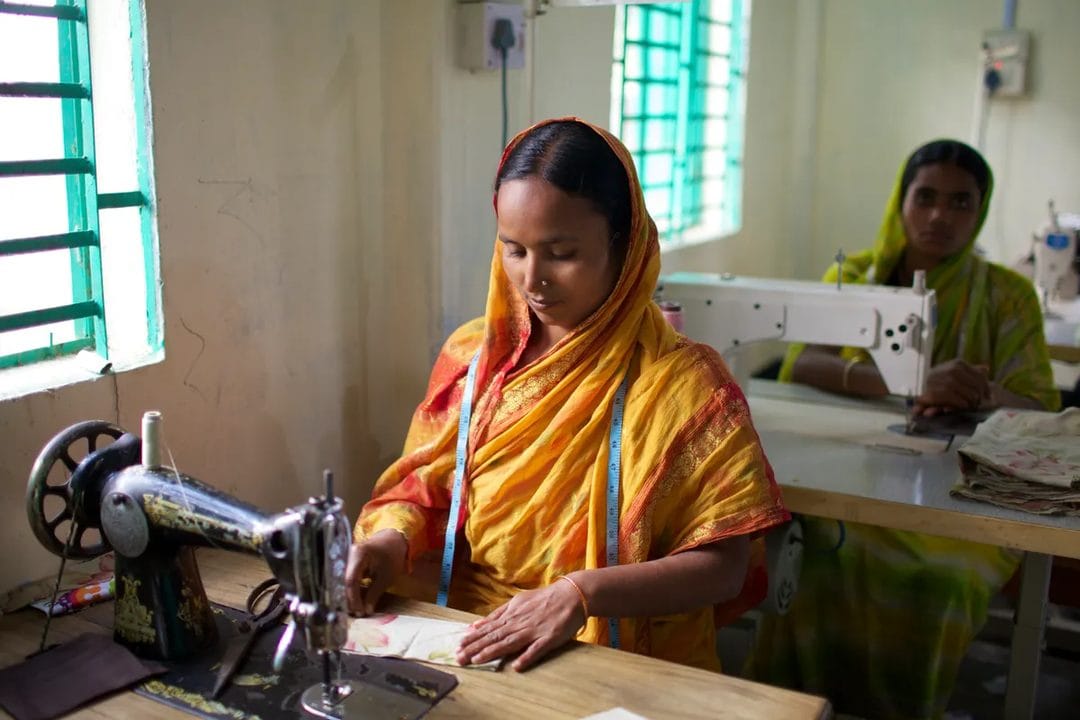
Trade between the two countries reached $11.8 billion in 2025, split between $9.5 billion in Bangladeshi exports to the US and $2.3 billion in US exports to Bangladesh — a $7.1 billion deficit in Washington's disfavour that grew roughly 18 percent year on year. Apparel carries almost all of Bangladesh's competitive position in the US market: shipments rose to $8.2 billion in 2025, lifting Bangladesh's share of the US apparel market from 9.26 percent to 10.53 percent. That momentum did not carry into 2026. Apparel exports to the US fell 5.75 percent year on year to about $4.01 billion in the first half of the year, while Vietnam, Cambodia and Indonesia gained ground in the same market.
The ART carries commercial commitments in both directions, though the obligations are not evenly distributed. Bangladesh agreed to purchase roughly $3.5 billion in US agricultural products and about $15 billion in US liquefied natural gas over 15 years, alongside removing non-tariff barriers such as accepting US vehicle safety standards and FDA certification for medical devices and pharmaceuticals. A count of the treaty's operative language found the phrase "Bangladesh shall" 127 times against "the United States shall" five times — a gap that trade analysts cited by The Daily Star point to as evidence of the negotiating leverage each side held.
Military and diplomatic contacts have deepened in parallel
- From 19 to 29 July, soldiers from US Army Pacific and the Oregon National Guard trained with Bangladesh's 1st Para Commando Battalion in Exercise Tiger Lightning 2026, covering jungle operations and counterterrorism readiness.
- US Special Presidential Envoy for South and Central Asia Sergio Gor visited Dhaka from 30 July to 1 August, meeting Bangladeshi leadership to discuss trade, investment, the Rohingya crisis, pharmaceuticals, technology cooperation and Bangladesh's potential role in the US-led PAX Silica economic-security initiative.
- Admiral Steve Koehler, commander of the US Pacific Fleet, followed with a visit from 4 to 6 August, discussing maritime security, disaster response, a prospective General Security of Military Information Agreement, an invitation for Bangladesh's navy to the 2028 RIMPAC exercise, and the next CARAT bilateral naval drill set for November.
Officials in Washington have framed the outreach as part of a broader regional calculation that includes India and China rather than a bilateral relationship in isolation. US Ambassador to Bangladesh Brent Christensen said in February that Washington intended to supply defence equipment as a counterweight to China's growing regional presence while also encouraging Dhaka to maintain stable ties with New Delhi.
The LDC clock keeps running
Bangladesh is scheduled to graduate from United Nations Least Developed Country status on 24 November 2026, a milestone tied to preferential market access that Dhaka's export-dependent garment sector has relied on for decades. The government has formally requested a three-year deferral, to 2029, arguing it needs more time to complete the reforms recommended by the UN Committee for Development Policy. The UN Economic and Social Council referred the request to the General Assembly for consideration in July, and a decision on the timeline remains pending.
The European Union has already moved on a parallel track, agreeing that Bangladesh will keep zero-duty access under its "Everything But Arms" scheme for at least three years past the graduation date, through the end of 2029, under a revised General System of Preferences framework. Bangladesh has never qualified for duty-free treatment under the equivalent US programme, which means the outcome of the LDC deferral request matters less for its access to the American market than the terms already locked into the ART — and considerably more for preferences it still holds in Europe and elsewhere.